By Felipe Morales, CEO of ESBUENISIMO LINKS
Off-page SEO: what it is, which factors matter in 2026 and how to do it
Off-page SEO explained: what it is, how it differs from on-page SEO, which external factors matter in Google and AI search in 2026, and how to work on it step by step.
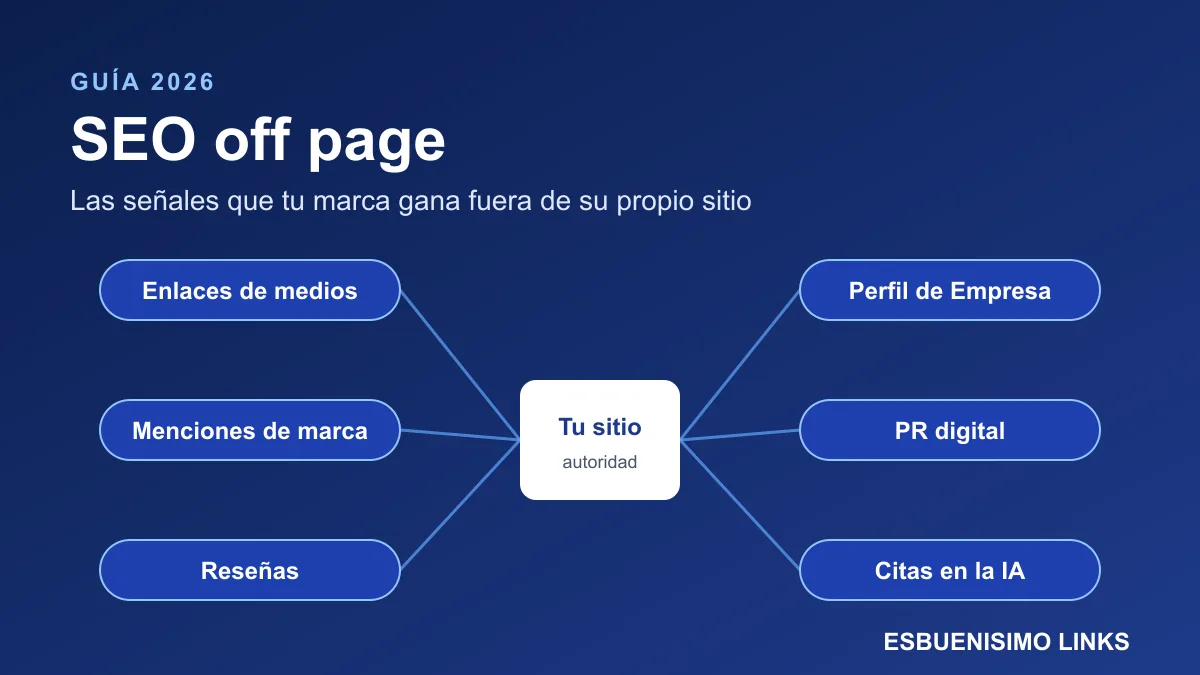
A company can have the best website in its industry, fast, well organized and full of good content, and still sit on page two of Google. The difference is usually outside the site: how many trustworthy sites link to it, how many media outlets mention it and what customers say about it. That is off-page SEO, and in 2026 it matters on two fronts at once: Google results and the answers of assistants such as ChatGPT, Gemini and Perplexity.
This guide is written for two readers. For the SEO manager, it organizes the factors and the metrics. For the marketing or communications manager, it explains in business terms why a brand's external reputation is also a ranking asset.
What is off-page SEO
Off-page SEO is everything done outside your own site to make search engines see it as more relevant and trustworthy. Its core is backlinks, the links other sites point to yours. It also includes unlinked brand mentions, reviews, your Google Business Profile and, more and more, citations in AI answers.
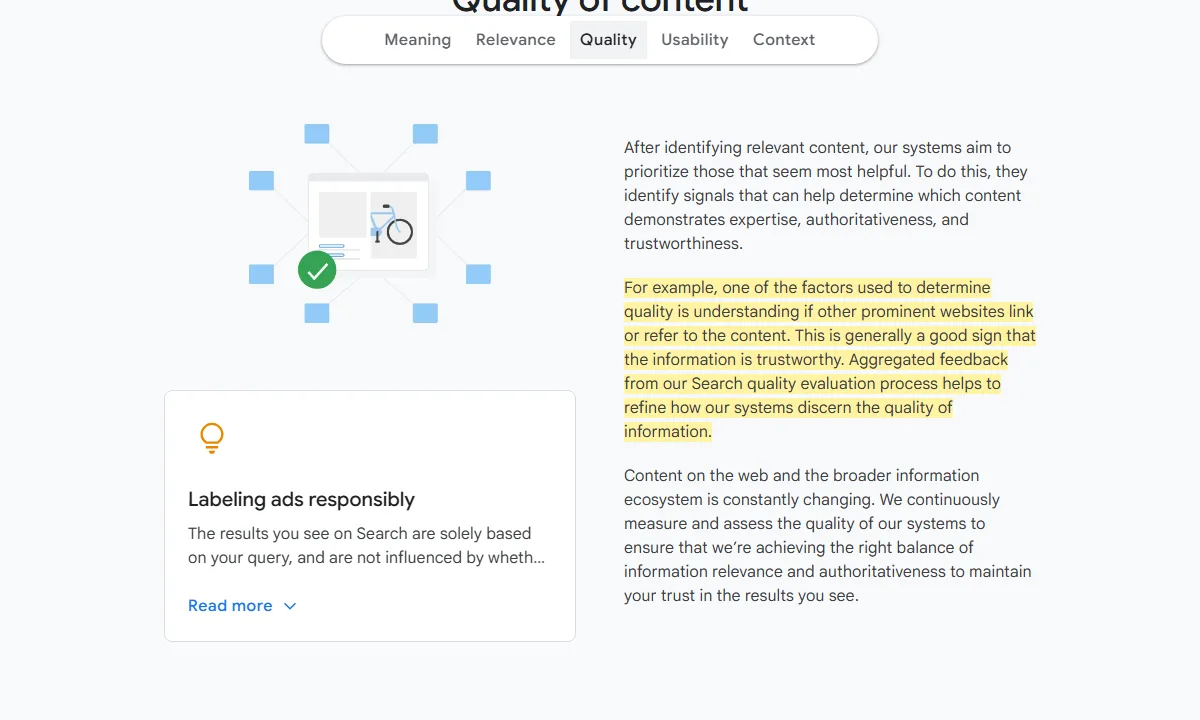
Google says so in its own documentation. On the page that explains how it ranks results, it states that one of the factors used to determine quality is "understanding if other prominent websites link or refer to the content", because that is generally a good sign the information is trustworthy (Google, How Search Works). Note the detail: link or refer. It is not only about links.
A metric that comes up constantly here is DR (Ahrefs Domain Rating) or DA (Moz Domain Authority): a 0 to 100 score that estimates the strength of a domain's link profile. It is not a Google metric, but it is useful for comparisons. We cover it in what domain authority is and how to increase it.
On-page vs off-page SEO: how they differ
The simplest way to see it: on-page SEO tells Google what your page is about; off-page SEO helps it decide whether to believe you over the competition. Neither replaces the other.
| Aspect | On-page SEO | Off-page SEO |
|---|---|---|
| Where it happens | Inside your site | On other sites, media, search engines and platforms |
| Who controls it | Your team, directly | Third parties: media, customers, partners, journalists |
| Examples | Titles, content, internal links, speed | Backlinks, press mentions, reviews, Business Profile |
| What it tells Google | Relevance: what the page is about | Trust and authority: whether others vouch for you |
| Typical timeframe | Days or weeks after the change | Months, because it depends on crawling other sites |
| Team involved | SEO, content, development | SEO, communications, PR, marketing |
The last row is what changes the conversation inside a company: off-page SEO is not just the specialist's job. What the communications team does with the press is already off-page SEO, even if nobody calls it that.
🚀 Digital PR & Link Building
Rank #1 on Google and Get Mentioned by AI
1,400+ media outlets in 8 countries. Backlinks that Google and ChatGPT recognize as trusted authority sources.
See plans and pricing →The external factors that matter in Google and AI in 2026
1. Links from authoritative, topically relevant sites. Still the most measured signal. Backlinko's study of 11.8 million Google results found that the first result has on average 3.8 times more backlinks than results in positions 2 to 10 (Backlinko). It is a correlation, not a recipe, but the pattern repeats across most industry studies.
2. Unlinked brand mentions. An article that names your company without linking to it still adds reputation, and in AI search it can weigh as much as a link, because models read text, not just links. We go deeper in backlinks vs. unlinked mentions.
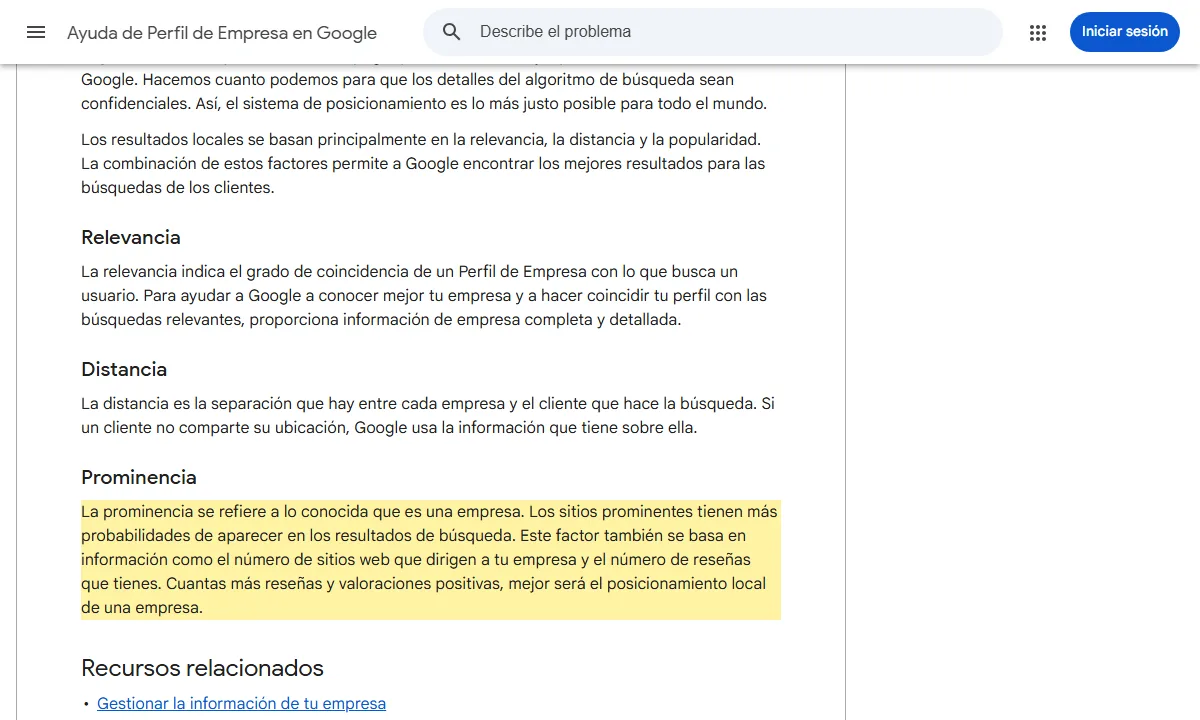
3. Local prominence. For businesses with a physical location, Google says local results depend on relevance, distance and prominence, and that prominence is based on info like "how many websites link to your business and how many reviews you have" (Google Business Profile Help).
4. Brand and author reputation. What independent media say about the company and its spokespeople feeds the experience, expertise, authoritativeness and trust signals Google describes in its documentation.
5. Citations in AI. AI assistants build answers from external sources, and the press is among the most cited. A well-run off-page SEO strategy today is also an AI visibility strategy.
| Off-page factor | What it signals | How to work on it | Who drives it |
|---|---|---|---|
| Backlinks from media and industry sites | Authority and trust | Digital PR, media articles, citable content | SEO + communications |
| Unlinked brand mentions | Awareness, recognized entity | Spokespeople, press, columns | Communications |
| Reviews and Business Profile | Local prominence | Ask for reviews, complete listing | Marketing, customer service |
| Industry directories and associations | Consistent company data | Listings in chambers and associations | Marketing |
| Citations in AI assistants | Trusted source for the model | Presence in media AI reads | SEO + PR |
How to do off-page SEO step by step
- Measure the baseline. How many distinct domains link to the site, from which outlets, with which anchor texts and which pages get the most links.
- Compare with competitors. Sites that link to two or three competitors but not to you are the fastest prospect list there is.
- Pick target pages. Not every link should point to the homepage. Service pages, categories and original studies need their share.
- Choose media by audience, not just by metrics. An outlet with real traffic and readers in your industry is worth more than a high-DR site built to sell links.
- Give media something to publish. Original data, studies, available spokespeople and cases. That is the basis of digital PR with backlinks from press coverage.
- Measure monthly. With a simple dashboard like the one below.
| Metric | What it shows | Where to measure | Frequency |
|---|---|---|---|
| New referring domains | Real growth of the link profile | Ahrefs, Semrush, Search Console | Monthly |
| Links from news media | Editorial quality of the profile | Ahrefs or your own log | Monthly |
| Brand mentions | Awareness, linked and unlinked | Media monitoring | Weekly or monthly |
| Google reviews and rating | Local prominence | Business Profile | Monthly |
| Citations in ChatGPT, Gemini and Perplexity | AI visibility | Test prompts or GEO tools | Monthly |
| Organic clicks to target pages | Business impact | Search Console | Monthly |
Common mistakes when building external reputation
Buying volume instead of quality. A hundred links from sites with no readers do not replace five articles in real media. Google neutralizes links it detects as manipulation and, in serious cases, applies manual actions.
Repeating the same anchor text. If every link uses the same exact-match keyword, the profile looks artificial. A natural mix includes brand, URL, partial phrases and generic anchors.
Running SEO and communications separately. Communications lands a great article and nobody asks for the link; SEO buys links on sites communications would never approve for the brand. Getting both teams to coordinate is often the cheapest improvement.
Not measuring AI. In Reporter Outreach's State of Link Building 2026 survey (500 SEO professionals), 74% believe backlinks affect visibility in AI search, but only 24% are tracking it (Reporter Outreach).
How much to invest in links and mentions
There is no single rate, because it depends on the outlets, the country and how much original content the company brings. As an international benchmark, the same Reporter Outreach survey shows that 64% of professionals spend USD 3,000 or more per month on link building, and 75% expect costs to rise over the next two years. In Latin America, amounts vary widely with the size of each outlet, so ask for a quote with the media list in front of you.
What matters is measuring the budget against results: new domains, mentions, organic traffic and AI citations. If you want to start with real media and a transparent list, see how we approach link building in Chilean media, with more than 1,400 Latin American outlets available at ESBUENISIMO LINKS.
Frequently Asked Questions
What is off-page SEO?+
It is everything done outside your own website to improve its rankings: earning links from other sites (backlinks), brand mentions in the media, reviews, a complete Google Business Profile and citations in AI answers. Google uses these as signals that others trust your content.
What is the difference between on-page and off-page SEO?+
On-page SEO covers what you control inside your site: content, titles, internal links and user experience. Off-page SEO covers the reputation your site earns elsewhere, mainly through links and mentions from other sites. You need both: on-page tells Google what a page is about, and off-page helps Google decide whether to trust it.
What is link building in SEO?+
Link building is the off-page practice of earning or securing links from other websites to yours. The most valuable links come from real media and relevant sites with an audience, through digital PR, original data, partnerships or sponsored articles labeled correctly.
What are the different types of backlinks used in off-page SEO?+
Editorial links from news articles, links from guest posts, links from partners and industry associations, links from directories and business listings, and sponsored or paid links, which Google asks to be marked with rel="sponsored". Mentions without a link also count as a reputation signal.
How long does off-page SEO take to work?+
New links usually take weeks to be crawled and months to show up in rankings. As a working rule, evaluate an off-page SEO strategy in three- to six-month cycles, comparing organic visibility, referring domains and mentions against the starting point.
Ready to rank #1 and get mentioned by AI?
Digital PR & Link Building in 1,400+ media outlets across 8 countries. Google and ChatGPT recognize you as an authority source.
See plans and pricing