By Felipe Morales, CEO of ESBUENISIMO LINKS
Branding: what it is, elements, examples and how to measure it in 2026
Branding explained: what it is, its four elements, examples from the most valuable brands of 2026 per Interbrand, and how to measure it with searches, media and AI.
Branding is the work of turning a company into a brand people recognize, remember and prefer. For a marketing manager it is the difference between competing on price and competing on preference. This guide explains what branding is, its elements, what the world's most valuable brands teach in 2026 and, above all, how to measure it with data on Google, in the media and in artificial intelligence.
What is branding
Branding is the process of defining what a brand promises, how it looks, how it sounds and what place it wants in people's minds, and of making sure that promise is kept at every touchpoint. It is not just the logo: a logo is part of visual identity, and identity is only part of branding.
It helps to separate it from related ideas. Brand positioning is the specific place the brand wants against competitors; brand awareness is how many people know it; and corporate image is how the public sees the company today. Branding is the work that connects all three.
The elements of branding
Agencies use different models, but nearly all agree on four blocks:
- Purpose: why the brand exists and what it promises customers.
- Identity: name, logo, colors, typography, tone of voice and key messages.
- Experience: product, service, support and after-sales; where the promise is kept or broken.
- Reputation: what media, reviews, forums and, increasingly, ChatGPT or Gemini say when someone asks for a recommendation.
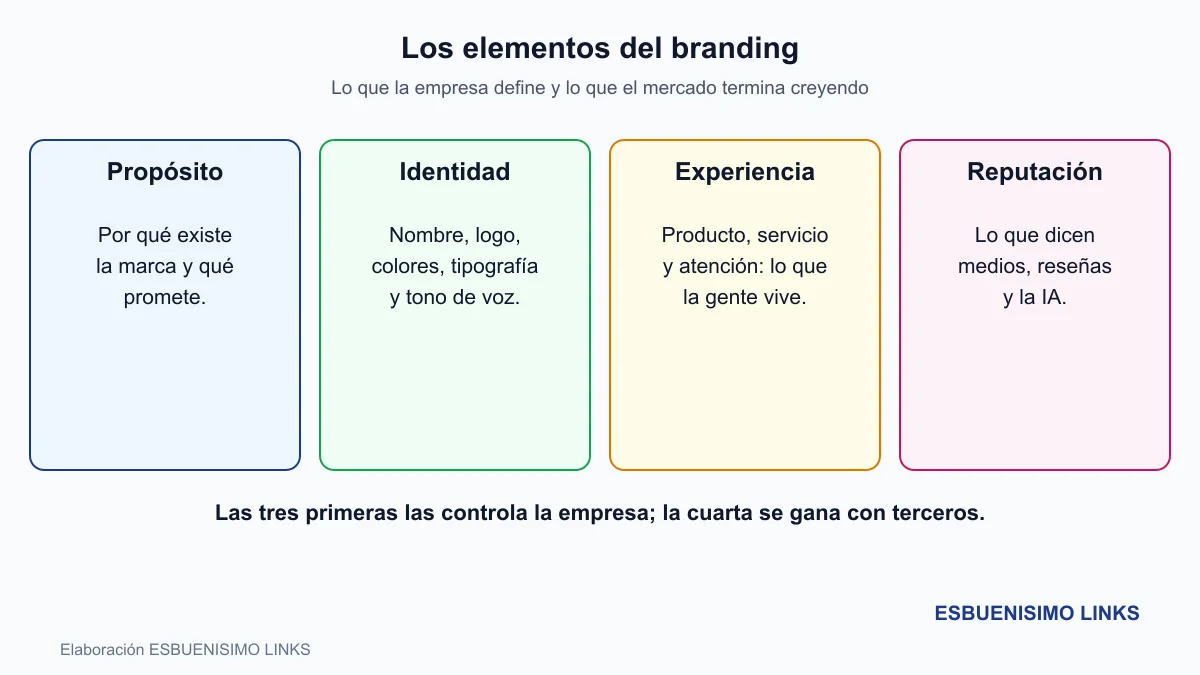
The company controls the first three. Not the fourth: it is earned through third parties talking about the brand. That is the weak spot of many branding plans, which invest in a logo and a campaign but not in getting authoritative media to mention the brand.
🚀 Digital PR & Link Building
Rank #1 on Google and Get Mentioned by AI
1,400+ media outlets in 8 countries. Backlinks that Google and ChatGPT recognize as trusted authority sources.
See plans and pricing →Types of branding
Branding is not only for consumer brands. Depending on the audience, there are several types, which share the same elements but change audience and channel:
- Corporate branding: the company brand for investors, regulators, media and talent. It is the one a communications manager works on most.
- Product branding: each product or line with its own identity, as consumer goods companies do with their brands.
- Personal branding: the brand of an executive, professional or spokesperson, increasingly visible on LinkedIn and in AI answers.
- Employer branding: the brand as a place to work, to attract and retain talent.
- Place branding: cities, regions and countries competing for tourists and investment.
Branding examples: the most valuable brands of 2026
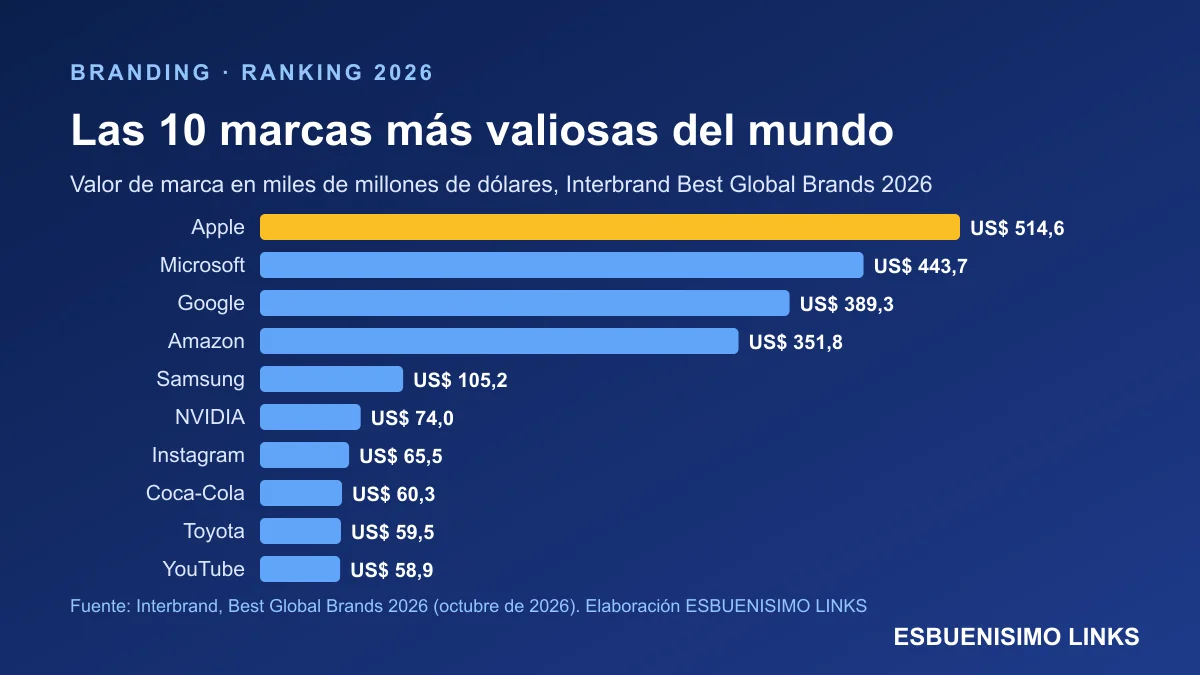
Interbrand's Best Global Brands 2026 ranking, released in October 2026, values each brand by its financial contribution, the role of the brand in purchase decisions and its strength against competitors. Apple remains first at US$514.6 billion (+9.3%), followed by Microsoft and Google, which climbs to third with a 22.8% rise.
| # | Brand | Brand value (US$ billions) | Change vs. 2025 |
|---|---|---|---|
| 1 | Apple | 514.6 | +9.3% |
| 2 | Microsoft | 443.7 | +14.2% |
| 3 | 389.3 | +22.8% | |
| 4 | Amazon | 351.8 | +10.0% |
| 5 | Samsung | 105.2 | +16.2% |
| 6 | NVIDIA | 74.0 | +71.5% |
| 7 | 65.5 | +14.4% | |
| 8 | Coca-Cola | 60.3 | +0.4% |
| 9 | Toyota | 59.5 | -19.9% |
| 10 | YouTube | 58.9 | +21.7% |
Three branding lessons come out of the ranking. First, NVIDIA (+71.5%) shows a brand can grow very fast when its name is tied to the trend of the moment, artificial intelligence. Second, Coca-Cola stays in the top 10 with just 0.4% growth: a consistent identity over decades sustains value even without growth. Third, Toyota falls 19.9%, the only drop in the top 10, a reminder that brand value can also be lost.
View the data as a table
| Apple brand value, US$ billions | US$ 514.6 |
| NVIDIA's growth, the largest in the top 10 | +71.5% |
| Google's growth, up to 3rd place | +22.8% |
| Toyota's drop, the only one in the top 10 | -19.9% |
How much Latin America searches for branding
Interest is high across the region. Mexico leads with 14,800 monthly searches for “branding”, and Chile adds 3,600. The question forms (“qué es branding” and “branding qué es”) add another 2,320 monthly searches in Chile, a sign that many marketing and communications teams are starting to organize their brand.
View the data as a table
| Mexico | 14,800 |
| Peru | 8,100 |
| Colombia | 6,600 |
| Argentina | 5,400 |
| Chile | 3,600 |
| Country | “branding” | “what is branding” (two Spanish variants) |
|---|---|---|
| Mexico | 14,800 | 10,200 |
| Peru | 8,100 | 4,800 |
| Colombia | 6,600 | 4,800 |
| Argentina | 5,400 | 5,700 |
| Chile | 3,600 | 2,320 |
How to measure branding with data
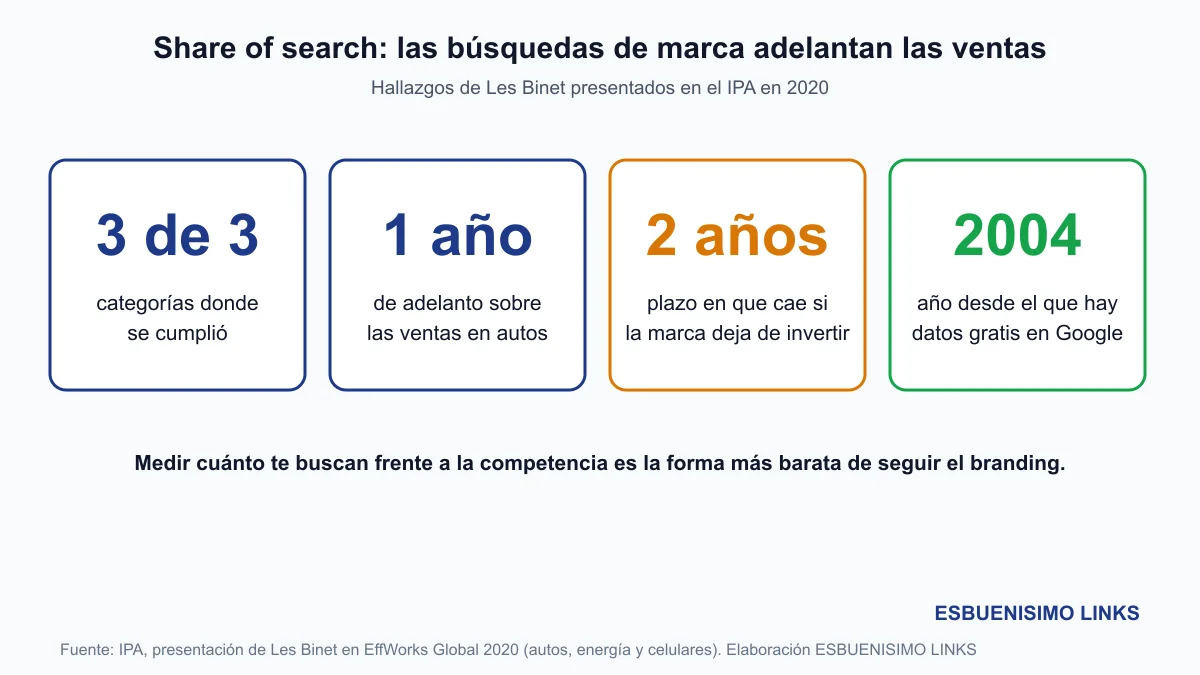
Branding has a reputation for being hard to measure, but there are now cheap monthly metrics. The most useful is share of search: your brand searches divided by searches for all brands in your category. Les Binet, head of effectiveness at adam&eveDDB, presented at the IPA's EffWorks Global 2020 that this figure moves with market share in the three categories he studied (cars, energy and mobile handsets) and can lead it by up to a year in cars.
| What to measure | How | What it says about branding |
|---|---|---|
| Brand searches | Google Ads or Google Trends, monthly | How many people already have you in mind |
| Share of search | Your brand searches ÷ searches for all brands in the category | Predicts market share (up to a year ahead for cars, per the IPA) |
| Media mentions | Press monitoring and link analysis | How much authoritative third parties talk about you |
| AI mentions | Standard prompts to ChatGPT, Gemini and Perplexity | Whether AI names you when someone asks for a recommendation |
| Awareness and preference | Brand surveys | Unaided and aided recall |
In Chile we already measure brand searches for hundreds of companies: the share of search ranking of Chile's most searched brands shows how attention is split in each category and is a starting point for comparing your brand with competitors.
Branding in the age of AI
Until recently, branding was played out in advertising, in stores and on Google. Now there is a new intermediary: when someone asks ChatGPT for the best store, bank or agency, the answer is built from what the AI finds in news outlets, reviews and authoritative sites. A brand that does not appear in those sources does not exist for the assistant, however strong its logo.
That is why modern branding adds two tasks to the classic plan:
- Earn mentions and links in media that Google and AI consider trustworthy, with a message consistent with the positioning.
- Measure what AI says about the brand every month, with the same prompts, to see whether the reputation you built reaches the answers.
How to start a branding plan
A reasonable plan for a mid-sized company starts by defining purpose and positioning, tidies up identity, reviews the touchpoints where experience fails and then works on reputation through third parties. Brand searches and share of search provide the baseline before starting, and let you show the board whether branding is working.
At ESBUENISIMO LINKS we help brands earn linked mentions in more than 1,400 Latin American outlets, the part of branding that builds authority on Google. And if you want to know what ChatGPT and Gemini say about your brand, our GEO agency measures and improves your AI visibility.
Frequently Asked Questions
What is branding?+
Branding is the process of building a brand: defining what it promises, how it looks and sounds, and getting the market to recognize and prefer it. It includes visual identity, but also customer experience and the reputation built by third parties.
What are the basics of branding?+
Purpose (why the brand exists), identity (name, logo, colors, typography and tone), experience (what customers live) and reputation (what media, reviews and, increasingly, AI say).
What is the difference between marketing and branding?+
Branding defines who the brand is and what place it wants in people's minds; marketing is the set of actions to sell, such as pricing, channels, promotions and advertising.
How can I make my brand famous?+
Be consistent in identity and experience, earn coverage in media your audience reads, collect reviews, and make sure AI assistants find trustworthy sources that mention you.
How do you measure branding?+
With brand searches on Google, share of search against competitors, media mentions, AI assistant mentions and awareness surveys. Brand searches are the cheapest metric and can be checked monthly.
Ready to rank #1 and get mentioned by AI?
Digital PR & Link Building in 1,400+ media outlets across 8 countries. Google and ChatGPT recognize you as an authority source.
See plans and pricing