By Felipe Morales, CEO of ESBUENISIMO LINKS
SEO copywriting: how to write for Google, for AI and for the media
SEO copywriting guide for 2026: the structure, titles and data Google and AI look for, what Ahrefs and the Princeton GEO study found, and how to write a sponsored article safely.
SEO copywriting is writing text that answers what a person is looking for while letting Google and AI assistants understand, classify and cite it. In 2026 you no longer write for one search engine: the same article is read by Google, ChatGPT, Perplexity and, if it runs in a media outlet, that outlet's readers.
This guide sums up what works according to the data, how to structure a text and how writing changes when the piece is a sponsored article, that is, a paid article in a digital outlet.
What SEO copywriting means today
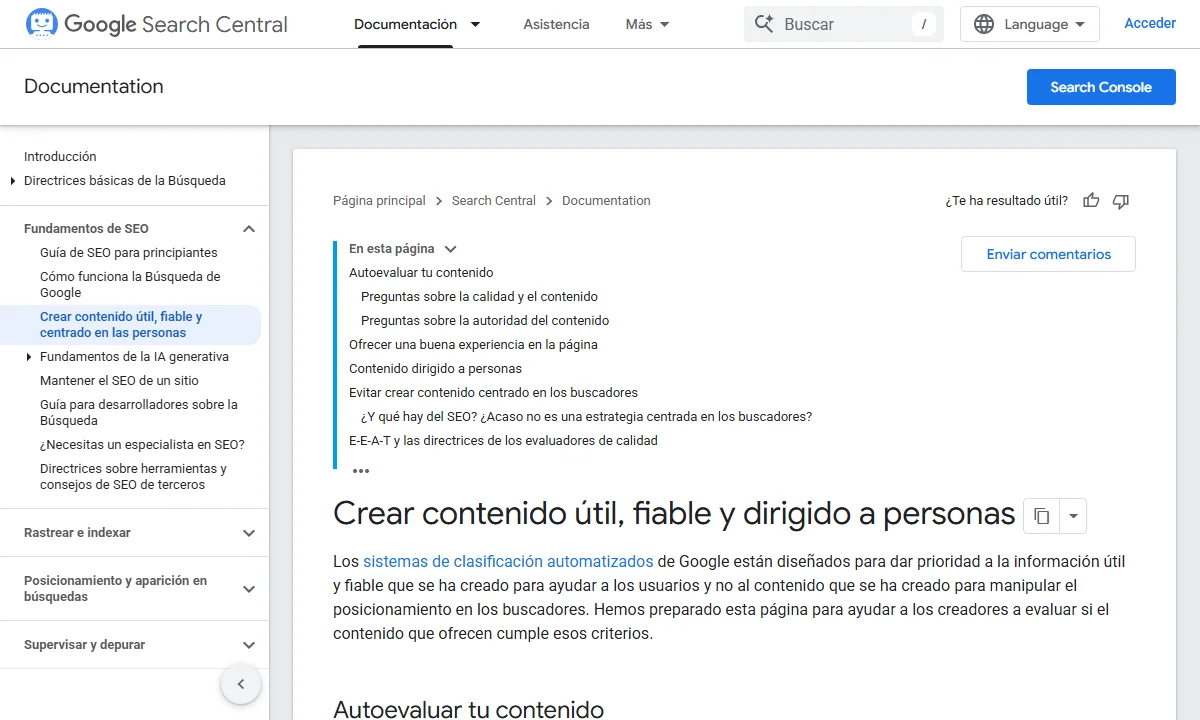
For years, "writing for SEO" meant repeating the keyword. That no longer works, and Google says so explicitly in its guide to helpful, reliable, people-first content: its systems reward content created to help, not content created to manipulate rankings.
Modern SEO copywriting has three audiences. Google needs to know what the page is about (keyword in the title and some headings). AI needs sentences it can quote as is: sourced data, short definitions, direct answers. And the person needs the text to solve something. It is a different discipline from content marketing, which decides which topics to publish and for whom; SEO copywriting is how each piece is written.
View the data as a table
| Argentina | 180 |
| Mexico | 110 |
| Peru | 80 |
| Colombia | 50 |
| Chile | 40 |
Interest in the topic is spread across Latin America: Argentina has the most monthly searches for "redacción SEO" (SEO writing in Spanish) and its variants (180), followed by Mexico (110), according to Google Ads. In the United States, "seo copywriting" gets 880 searches a month.
SEO copywriting and AI: what the data says
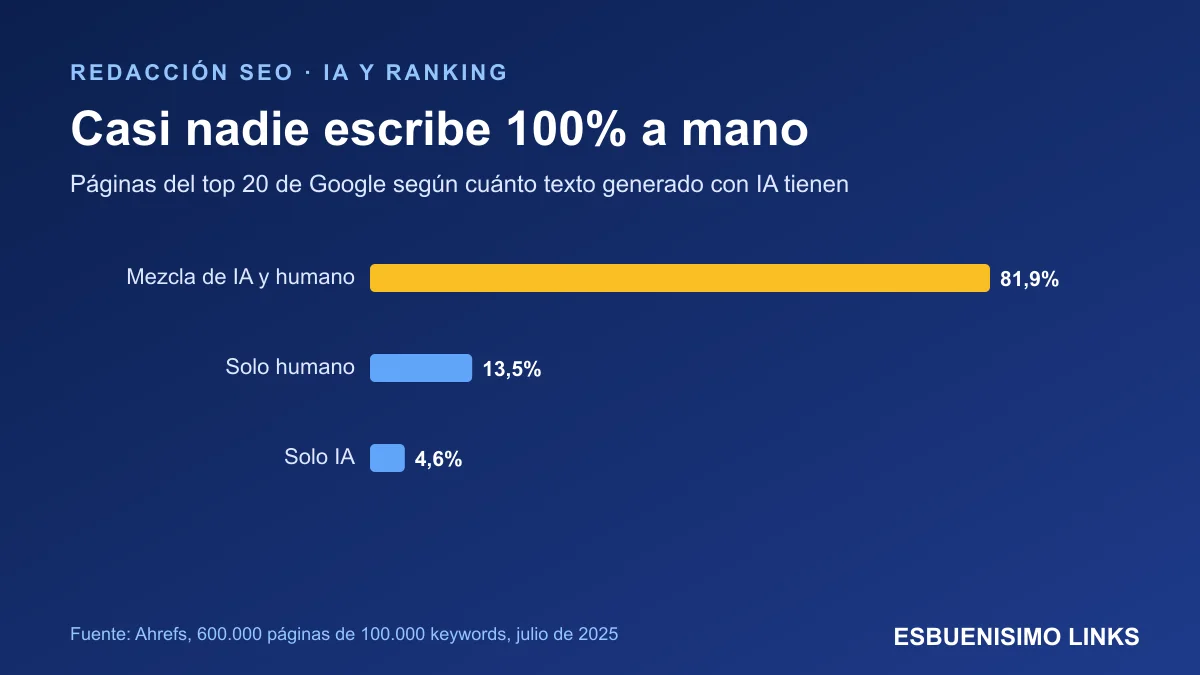
The most frequent question is whether writing with AI hurts rankings. The largest study available is by Ahrefs: in July 2025 it analyzed 600,000 pages ranking in the top 20 for 100,000 keywords with its AI detector.
Only 13.5% of pages were 100% human; 81.9% mixed human and generated text, and 4.6% were fully AI. The correlation between AI share and ranking was 0.011, practically zero. Fully AI pages appeared in the top 20 but rarely in first place.
The right reading is not "it does not matter" but that Google does not look at who wrote the text, only at whether it adds value. What it does penalize is mass content made to rank without value, which its spam policies call scaled content abuse.
For a marketing or communications team, this changes the brief. The question is no longer "who writes it" but "what does it contribute": a figure from your own sales, a quote from someone at the company with real experience, a comparison nobody else has published. AI can help draft and edit, but those elements have to come from the brand, and they are exactly what Google and AI assistants look for when deciding which page to show or cite.
What makes a text get cited by AI
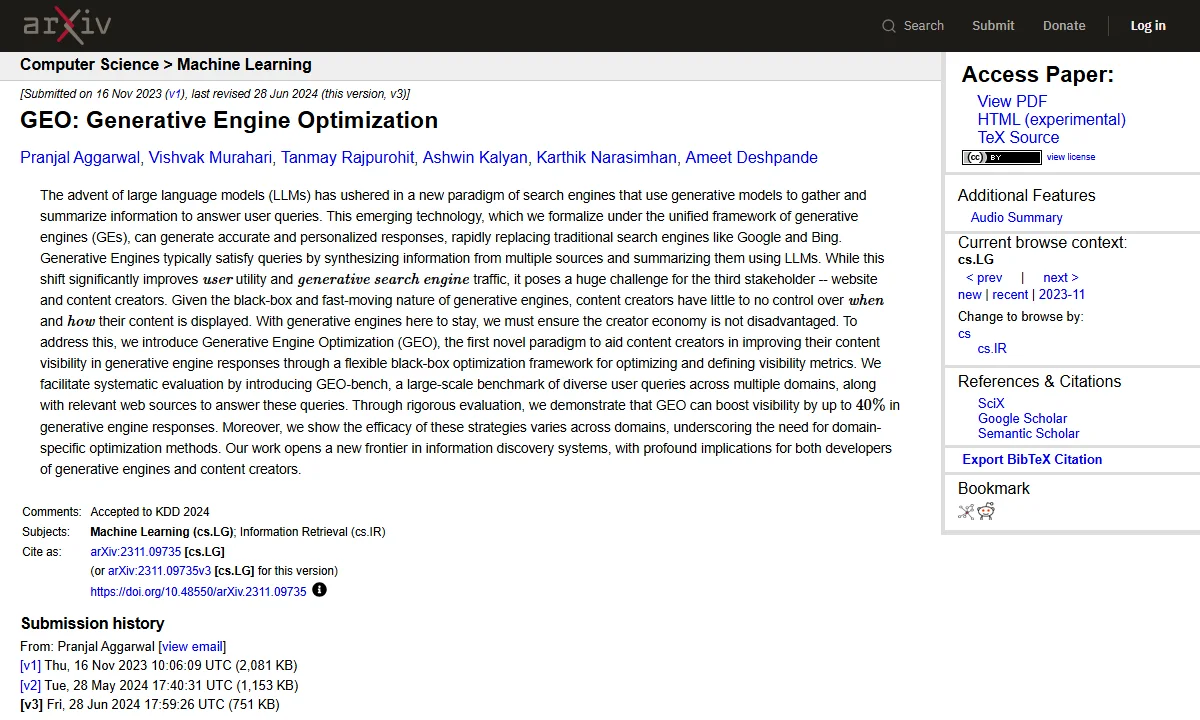
The paper GEO: Generative Engine Optimization, by researchers from Princeton and other institutions (accepted at KDD 2024), tested which changes to a text increase its visibility in generative engine answers. It found gains of up to 40%. The techniques that worked best were adding statistics, quotations and sources; keyword stuffing did not help.
View the data as a table
| pages analyzed by Ahrefs | 600,000 |
| correlation between AI share and ranking (near zero) | 0.011 |
| maximum visibility gain in AI answers with GEO techniques | up to 40% |
That is good news for anyone who writes with data: what improves visibility in AI is the same thing that makes a text credible to a reader. We go deeper in our guide to answer-ready content for AI.
🚀 Digital PR & Link Building
Rank #1 on Google and Get Mentioned by AI
1,400+ media outlets in 8 countries. Backlinks that Google and ChatGPT recognize as trusted authority sources.
See plans and pricing →How to write SEO content step by step
- Choose a keyword with clear intent. Check volume and look at the SERP: if the top results are guides, write a guide; if they are stores, the format is different.
- Build the structure before writing. One H2 per important question; the main keyword in 2 or 3 of them and natural variations in the rest.
- Answer in the first paragraph. A two-sentence definition or answer that AI and Google can extract.
- Add data with source and date. Your own figures or primary sources, linked. This is what raises citability the most.
- Use tables and lists for comparisons or steps. They make reading and extraction easier.
- Link with purpose: 2 to 4 external sources and 3 internal links with descriptive anchors.
- Finish with a title and description that include the keyword and promise what the text delivers.
| Element | For Google | For AI | For the reader |
|---|---|---|---|
| Title | Keyword first, under 60 characters | Unambiguous topic | A concrete promise |
| First paragraph | Confirms intent | Quotable definition | Immediate answer |
| H2s | Keyword in 2 or 3 | Real questions | Fast navigation |
| Data | Quality signal | Up to 40% more visibility (GEO study) | Credibility |
| Links | Context and authority | Verifiable sources | Further reading |
Common mistakes when writing for search
Texts that do not rank usually fail for the same reasons, and almost none have to do with word count.
- Writing for the keyword, not the search. If someone searches "price of X" and the text opens with the company's history, Google and the reader move on to the next result.
- Repeating the keyword. The GEO study showed keyword stuffing does not improve AI visibility, and Google has treated it as spam for years.
- Claims without sources. "80% of users prefer…" with no link or date undermines credibility, and AI has no way to verify it.
- Two texts for the same keyword. When a site publishes several pages on the same topic, they compete with each other and none rises. Before writing, check whether the topic already exists and strengthen that page.
- Publish and forget. A text with three-year-old figures loses to an updated one. Reviewing the data and dates of the pieces that bring traffic is part of the writing.
A practical rule for marketing or communications teams: if the text does not contain at least one fact the reader did not already know, it probably has no reason to rank or to be cited.
SEO copywriting for sponsored articles and media
A sponsored article or advertorial has an extra rule: it is published in an outlet the brand does not own and read by that outlet's audience. If it reads like a brochure, the outlet rejects it or nobody reads it, and AI does not cite it either.
What works is writing it as a useful story for that audience: a topic of interest, verifiable data, the brand as one source among others and a single link in a natural context with a descriptive anchor. In its link spam policies, Google also asks that paid links carry rel="sponsored" or nofollow; a serious outlet applies this according to its policy.
| Text on your own blog | Sponsored article in a media outlet |
|---|---|
| The brand's keyword | A topic of interest to the outlet's readers |
| Several internal links | One link to the brand, in context |
| The brand's tone | The outlet's journalistic tone |
| Goal: rank | Goal: authority, referral traffic and AI citations |
In our link building service, writing is included: each sponsored article is written for the outlet where it runs, with data and a natural link to the page the brand wants to rank. That is how a single text adds value on Google, in AI and with readers.
Frequently Asked Questions
What is SEO copywriting?+
It is writing text that answers what a person is looking for while letting Google and AI assistants understand, classify and cite it: a clear keyword, a structure with headings, sourced data and useful links.
What are the 4 steps to write SEO content?+
Research the search (keyword and intent), plan the structure with H2s that answer questions, write with your own data and examples, and review title, description, links and images before publishing.
Does Google penalize AI-written content?+
Not for using AI as such. A 2025 Ahrefs study of 600,000 pages found a near-zero correlation (0.011) between AI share and ranking. Google does penalize mass-produced content made to manipulate rankings.
What is the difference between SEO writing and copywriting?+
Copywriting aims to persuade someone to buy or act. SEO writing aims to get the text found. In practice they are combined: first you have to appear, then you have to convince.
How do you write a sponsored article with a link?+
As a useful article for the outlet's readers, with the link in a natural context and a descriptive anchor. Google asks for paid links to be marked rel="sponsored" or nofollow.
Ready to rank #1 and get mentioned by AI?
Digital PR & Link Building in 1,400+ media outlets across 8 countries. Google and ChatGPT recognize you as an authority source.
See plans and pricing