By Felipe Morales, CEO of ESBUENISIMO LINKS
What is content marketing? Real examples and how to measure it in 2026
What content marketing is, real company examples (Michelin, BBVA, Red Bull), 2026 B2B data and how to measure it and distribute it in the media to earn links and AI citations.
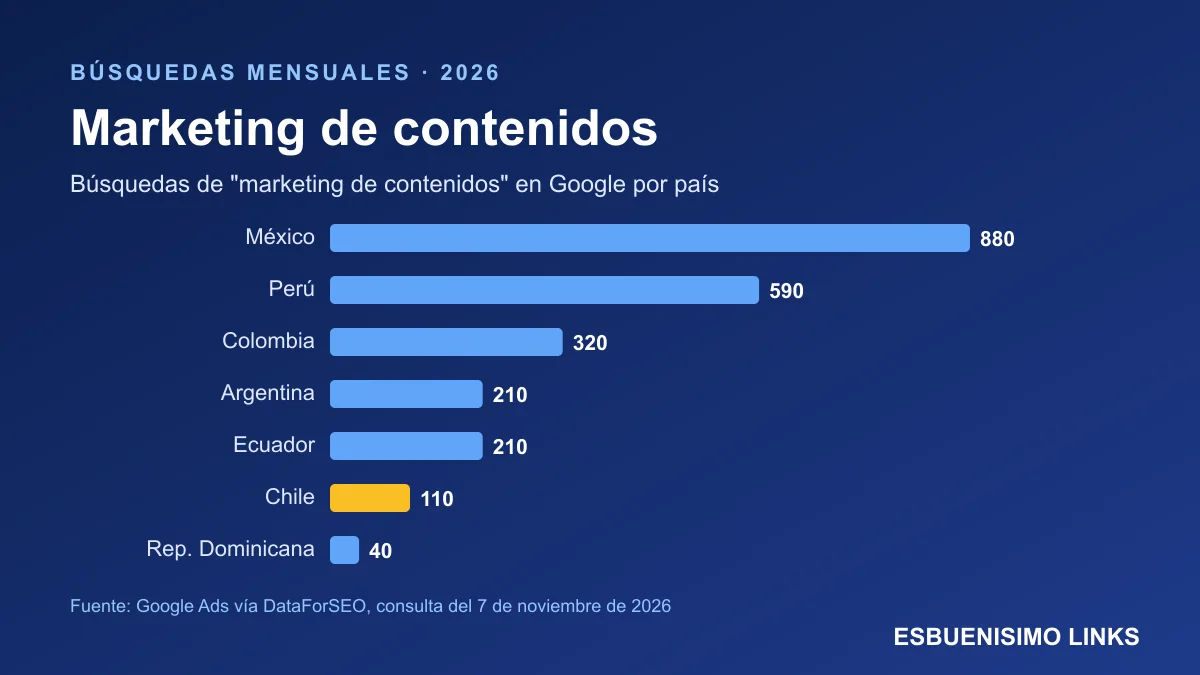
Content marketing is the strategy of creating and distributing useful information (articles, studies, guides, videos, podcasts) to attract a defined audience and, over time, lead it to buy. It doesn't interrupt like an ad: it answers the questions customers are already asking. In the United States, "content marketing" is searched about 135,000 times a month on Google; in Latin America, its Spanish equivalent peaks in Mexico, with 880 monthly searches.
This guide is written for marketing and communications managers: what it is, which real company examples work, how to measure it and why publishing only on your own blog is no longer enough.
What is content marketing and how is it different from advertising?
Advertising buys attention: you pay to appear in front of someone who wasn't looking for you. Content marketing earns it: you publish something people want to read and, if it's good, they come back, share it and remember you when they need the service. That's why it's measured in months, not days, and its assets (a well-ranked article, a study quoted by the press) keep working long after publication.
It helps to separate it from two close cousins. Branded content aims to move people and tie the brand to a value, often in an entertainment format. Sponsored content in the media, such as an advertorial, is paid and labeled as such. Content marketing can use both, but its core is usefulness to the customer.
View the data as a table
| Mexico | 880 |
| Peru | 590 |
| Colombia | 320 |
| Argentina | 210 |
| Ecuador | 210 |
| Chile | 110 |
| Dominican Republic | 40 |
| Costa Rica | 20 |
| Uruguay | 10 |
Content formats B2B companies use
Not every format does the same job. A blog article attracts searches; a study with proprietary data attracts links and journalists; a customer case helps close the sale. A healthy plan mixes several:
- Articles and guides that answer concrete buying questions ("how much does it cost," "how to choose," "what's the difference").
- Studies and reports with industry data. These are what news outlets and AI assistants cite most, because they provide a figure that doesn't exist anywhere else.
- Executive opinion columns in trade media, which build the authority of both the person and the brand.
- Videos and podcasts to explain complex topics or show the product in action.
- Newsletters that keep in touch with people who aren't ready to buy yet.
- Customer cases, always with permission, for the final stage of the decision.
The practical rule is that every piece has a clear job in the funnel. If you can't say which customer question it answers, you probably don't need it.
🚀 Digital PR & Link Building
Rank #1 on Google and Get Mentioned by AI
1,400+ media outlets in 8 countries. Backlinks that Google and ChatGPT recognize as trusted authority sources.
See plans and pricing →What the data says about B2B content in 2026
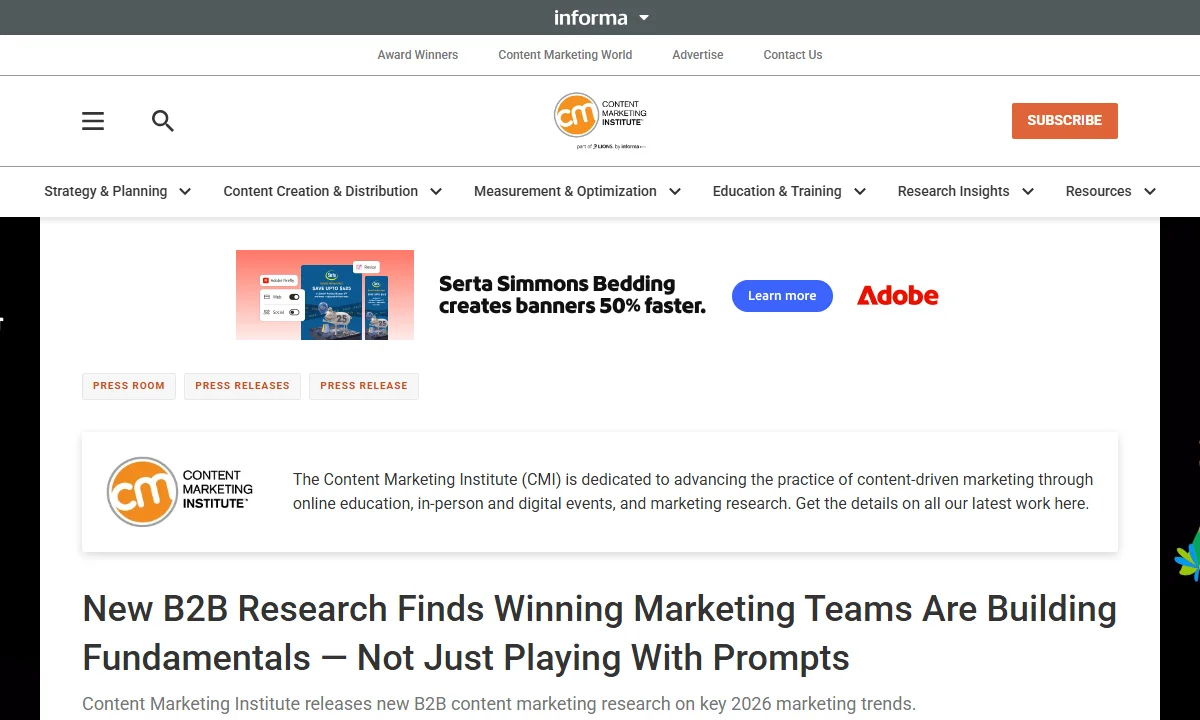
The annual study by the Content Marketing Institute (CMI) and MarketingProfs, published on October 8, 2025 with responses from more than 1,000 B2B marketers, shows a massive but uneven discipline. Almost everyone produces content; few turn it into results.
| Indicator | Result |
|---|---|
| Organizations that create thought leadership content | 96% |
| Marketers who use AI to produce content | 9 in 10 |
| Marketers who say AI improved their performance | Fewer than 4 in 10 |
| Organizations that personalize content | 89% |
| Of those, personalizing in only one or two channels | Nearly 60% |
| Will increase investment in AI tools in 2026 | 45% |
| Will increase investment in people (salaries, training) | 9% |
For a manager, the takeaway is simple: producing more is no longer the edge. AI made volume cheap, and CMI concludes that winning teams work on the fundamentals (strategy, audience, distribution), not just on prompts.
View the data as a table
| of B2B organizations create thought leadership content | 96% |
| personalize their content | 89% |
| use AI to produce content | 90% |
| will increase investment in AI tools in 2026 | 45% |
Content marketing examples from real companies
The cases every course mentions share one thing: the company publishes something its customer would use even if the product didn't exist.
| Company | Content | Since | Verifiable fact |
|---|---|---|---|
| Michelin | Michelin Guide for motorists | 1900 | Free first edition of nearly 35,000 copies; began charging in 1922 |
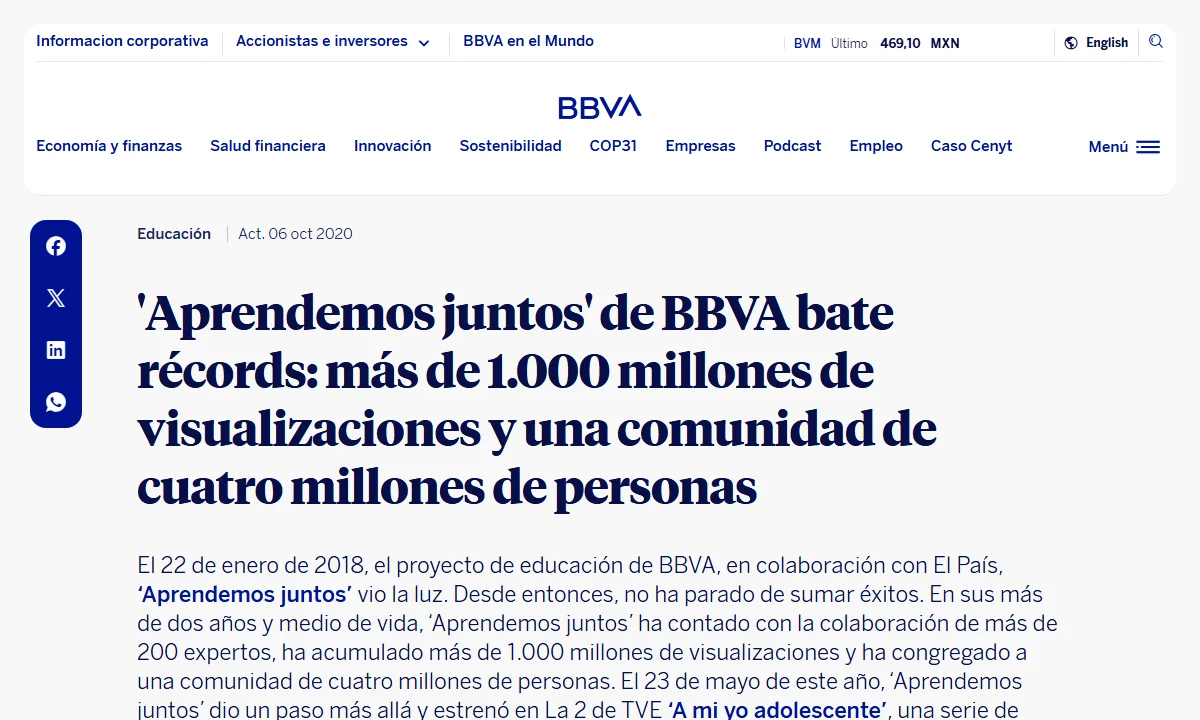
| BBVA | Aprendemos juntos (educational videos, with El País) | 2018 | 1.087 billion views as of September 2020 |
| Red Bull | Red Bull Media House: magazines, TV and events | Founded by the brand's creators | Publishes The Red Bulletin and runs ServusTV and Red Bull TV |
The Michelin Guide was created so people would drive more and wear out more tires; 126 years later it is still the reference for fine dining. Aprendemos juntos, launched by Spanish bank BBVA on January 22, 2018, brought together more than 200 experts and a community of four million people in under three years. Neither talks about the product: both talk about what matters to the customer.
How to measure content results
The most common mistake is measuring only visits. A B2B piece can have little traffic and still close big deals. It's more useful to measure by funnel stage:
| Stage | What to measure | Typical tool |
|---|---|---|
| Reach | Organic impressions and clicks, media mentions | Search Console, press monitoring |
| Authority | Referring domains, citations in ChatGPT, Gemini or Perplexity | Ahrefs, Semrush, prompt testing |
| Interest | Reading time, subscriptions, downloads | Google Analytics 4 |
| Conversion | Leads and sales attributed to content | CRM |
The authority row is the one that has changed most. Today a proprietary study can be worth more for the number of times AI cites it than for its direct visits. To go deeper on that, see how to get AI to mention your brand.
Why your content needs media distribution
A new corporate blog starts with little authority. It can have the best article in the market and still sit on page three of Google because no trusted site links to it. Distribution solves that in two ways:
- Links: when an authoritative outlet publishes your study or your opinion and links to you, Google passes part of that trust to your site. In SEO jargon, that's called link building.
- AI citations: AI assistants build their answers from sources they consider reliable, and the press is among them. In the AI visibility studies ESBUENISIMO LINKS runs in Chile, third-party sites such as media, portals and comparison sites get more than half of the citations when someone asks which company to hire.
For a Latin American company, local media matter twice over: they are the outlets your customers read, and they are the sources AI assistants pick up when someone asks a question in Spanish about your market. A study cited by a national newspaper often does more for your visibility than ten blog posts nobody links to.
That's why a complete content plan has two columns: what you publish on your site and what you get others to publish about you. For the second, ESBUENISIMO LINKS lets you publish content in Chilean media with a link to your site, chosen by authority and topic.
A content plan in 5 steps
- Define who you're talking to. An operations manager and a finance manager ask different questions about the same product.
- Build the list of questions. Use real searches (Google Ads, Search Console) and the questions your sales team hears.
- Create a proprietary asset. A study with data from your industry, a calculator or an index. That's what others cite.
- Distribute it beyond your site. Media coverage, opinion columns, industry newsletters and LinkedIn.
- Measure and update. Every quarter, check which pieces bring leads and which have gone stale.
Content marketing doesn't replace advertising or PR: it makes them cheaper, because every good piece keeps bringing visits, links and mentions long after it's published.
Frequently Asked Questions
What do you mean by content marketing?+
It's the strategy of creating and distributing useful information, such as articles, studies, guides or videos, to attract a defined audience and lead it to buy over time, without interrupting it the way advertising does.
What is the 70-20-10 rule in content marketing?+
It's a common planning rule of thumb, not a standard: about 70% of content is proven, core material, 20% builds on what already works and 10% is experimental. It helps balance safe output with testing.
What are examples of content marketing?+
The Michelin Guide, created in 1900 so people would drive more; BBVA's Aprendemos juntos, with over 1 billion views by 2020; and Red Bull Media House, which publishes magazines and runs TV channels.
How do you measure content marketing?+
By stage: reach (impressions, clicks and mentions), authority (referring domains and AI citations), interest (reading and subscriptions) and conversion (leads and sales attributed to content).
What is the 3-3-3 rule in marketing?+
It isn't a formal standard: different authors use it for different things, such as grabbing attention in 3 seconds, showing 3 key ideas and repeating the message 3 times. It's a reminder to be brief and clear, not a measurement method.
Ready to rank #1 and get mentioned by AI?
Digital PR & Link Building in 1,400+ media outlets across 8 countries. Google and ChatGPT recognize you as an authority source.
See plans and pricing