By Felipe Morales, CEO of ESBUENISIMO LINKS
SEO strategy: how to build one in 6 steps, with real data from Chile
How to build an SEO strategy in 6 steps: goals, keyword research with real data from Chile, page mapping, optimization, link authority and measurement.
An SEO strategy is the plan that defines which Google searches a company wants to win, with which pages and in what order. Without that plan, SEO becomes a list of loose tasks: fix titles, publish articles, buy links. With it, every action points to a search that brings customers. This guide explains how to build an SEO strategy in six steps, with real search data from Chile and what studies say about how long it takes.
What an SEO strategy is and why you need one
SEO stands for search engine optimization: optimizing a site so it shows up in Google's organic (unpaid) results. An SEO strategy answers three questions: who you are talking to, what that person searches for and what your site needs to show up when they do.
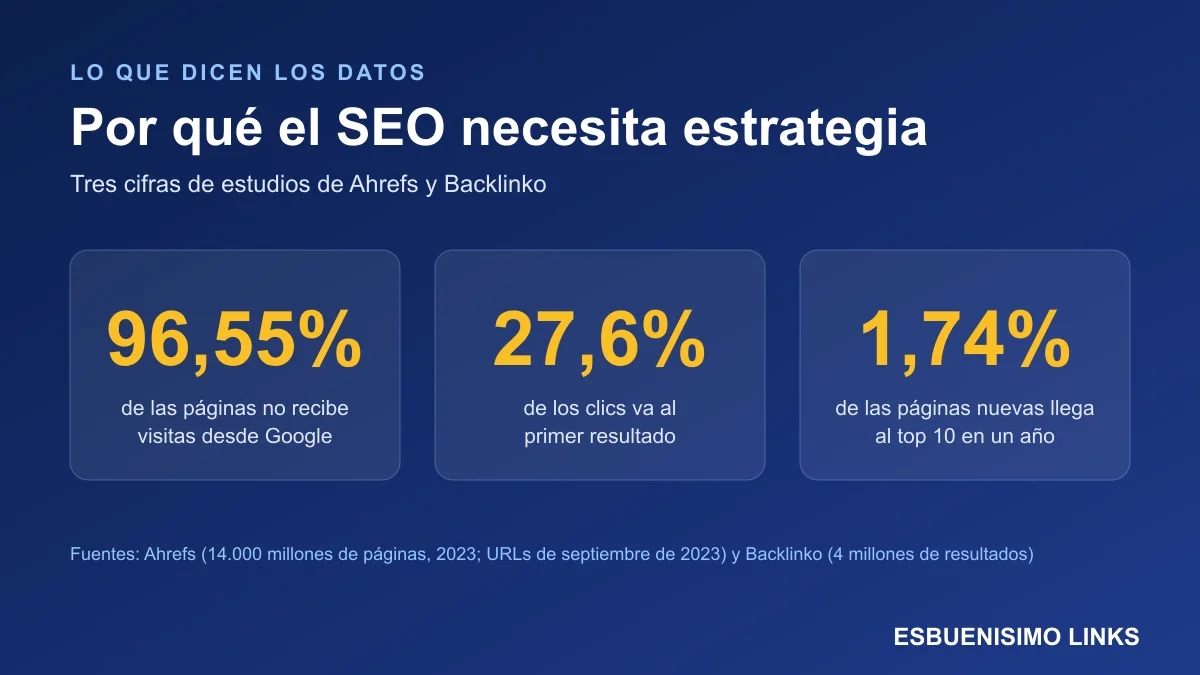
The reason to plan is that competition for clicks is very uneven. An Ahrefs study of 14 billion pages, published in December 2023, found that 96.55% of pages get no traffic at all from Google. And according to Backlinko, which analyzed 4 million results, the first organic result gets an average 27.6% of clicks and the top three get 54.4%.
View the data as a table
| of pages get no traffic from Google | 96.55% |
| of clicks go to the first result | 27.6% |
| of clicks go to the top three | 54.4% |
| of new pages reach the top 10 within a year | 1.74% |
In Chile, Google is still the front door: according to StatCounter, it handled 89.75% of searches in October 2026.
Step 1: set business goals, not traffic goals
The goal of an SEO strategy is not "more visits". It is selling more, getting more quote requests or showing up when a customer compares suppliers. So the first step is choosing the metric that matters: forms submitted, ecommerce sales or calls. Visits are a means.
For a marketing manager, this changes the conversation with the agency or in-house team: instead of asking how many keywords went up, you ask how many customers came from Google and what each one cost.
🚀 Digital PR & Link Building
Rank #1 on Google and Get Mentioned by AI
1,400+ media outlets in 8 countries. Backlinks that Google and ChatGPT recognize as trusted authority sources.
See plans and pricing →Step 2: research searches and separate intent
Keyword research shows what people type into Google and how many times a month. The most important part is separating intent: whether the person wants to learn something (informational) or wants to hire or buy (commercial).
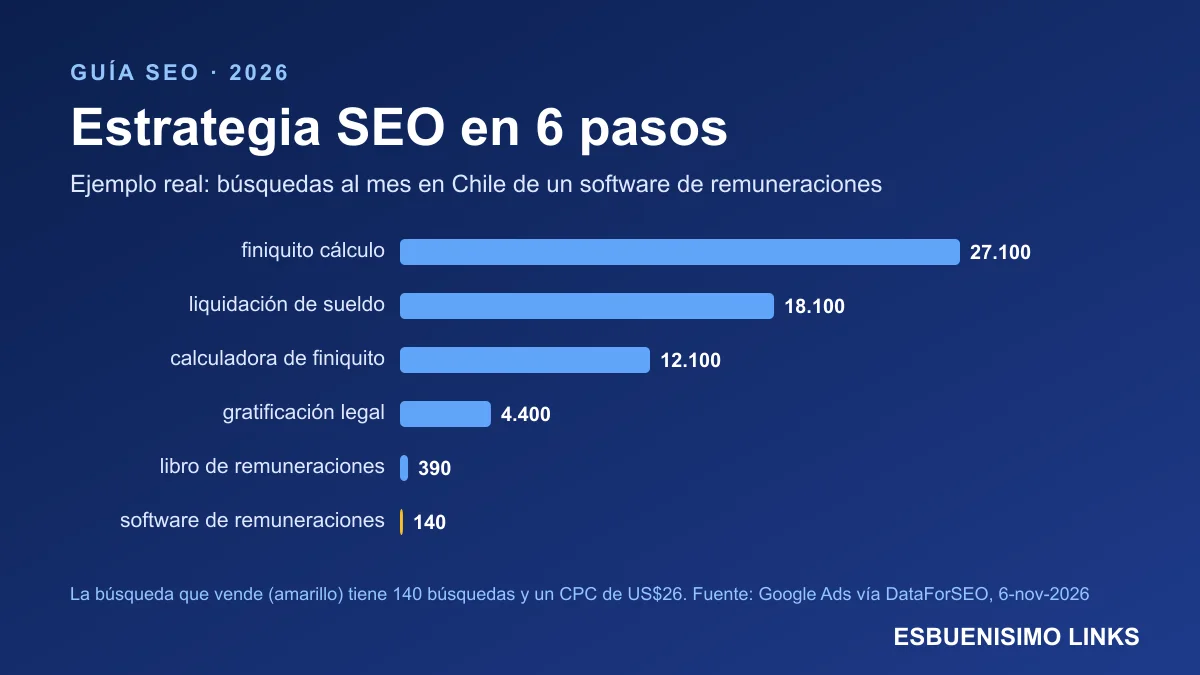
A real example. Take a Chilean company that sells payroll software. We checked its searches with Google Ads data, via DataForSEO, on November 6, 2026:
| Search (in Spanish) | Monthly searches in Chile | Google Ads CPC (USD) | Intent |
|---|---|---|---|
| finiquito cálculo (severance calculation) | 27,100 | 0.15 | Informational |
| liquidación de sueldo (payslip) | 18,100 | 0.67 | Informational |
| calculadora de finiquito (severance calculator) | 12,100 | 0.13 | Informational |
| gratificación legal (legal bonus) | 4,400 | 0.13 | Informational |
| libro de remuneraciones electrónico (electronic payroll book) | 390 | 3.10 | Informational |
| software de remuneraciones (payroll software) | 140 | 26.06 | Commercial |
| software rrhh (HR software) | 50 | 14.11 | Commercial |
The lesson is clear: the search that sells ("payroll software") gets 140 searches a month, but each Google Ads click costs more than 26 dollars. Informational searches have a hundred times the volume and are worth cents. A good SEO strategy uses both: a service page for the commercial search and a calculator or guide for the informational ones, which brings visits, links and trust. To go deeper on this step, see our guide to SEO ranking.
Step 3: assign one page to each search
With the list of searches, the next step is assigning them to pages. Each important search should have one page that answers it. If two pages compete for the same thing, Google hesitates and neither rises (this is called cannibalization).
In the payroll software example, that means one page for "payroll software", one free severance calculator for the high-volume searches and a guide on payslips, each targeting its own search and all linking to the service page. Splitting it this way also makes it easier to measure which page brings leads.
The most common structure is pillar and satellites: a main page (the service page or category) and several articles that answer related questions and link to it. Those internal links tell Google which page is most important in the group.
Step 4: optimize the site and the content
Before creating new content, review what already exists. An SEO audit shows the technical errors holding the site back: pages Google can't crawl, duplicate content, slow mobile pages. Then comes on-page SEO: titles, headings and copy that answer the search well.
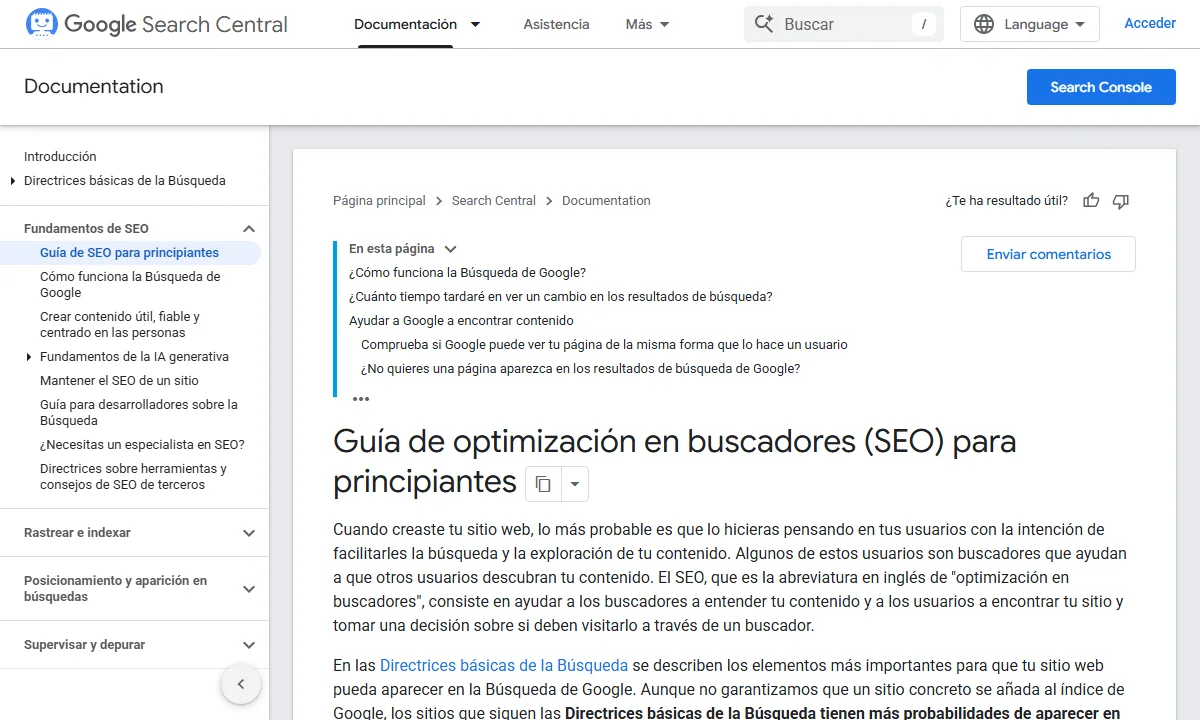
Google sums it up in its SEO starter guide: the goal is to help search engines understand content and help users find it. The same guide warns that the keywords meta tag is not used and that keyword stuffing goes against its spam policies.
Step 5: build authority with links and mentions
A well-made page competes against other well-made pages. What breaks the tie, in most cases, is authority: how many trusted sites link to it or mention the brand. That work is called link building, and in a business SEO strategy it is usually the step that weighs most for competitive searches.
The most effective ways are earning articles in national and industry media, publishing studies with proprietary data that others cite, and appearing in industry directories and comparison sites. The same links do something else: the outlets ChatGPT and Gemini cite are largely the ones Google considers trustworthy. To see how it is done in Chile, check the service at esbuenisimolinks.com/link-building-chile.
Step 6: measure, adjust and be patient
SEO takes time. Google's own guide says some changes show up in hours and others can take several months. Ahrefs data puts numbers on it:
| Data point | Figure | Source |
|---|---|---|
| New pages reaching the top 10 within a year | 1.74% | Ahrefs, URLs seen in September 2023 |
| Top 10 pages less than a year old | 13.7% | Ahrefs, 1.3 million US keywords |
| Average age of the #1 page | 5 years | Ahrefs |
| Pages with no traffic from Google | 96.55% | Ahrefs, 14 billion pages (2023) |
That is why an SEO strategy is evaluated in three-to-six-month cycles, with Google Search Console as the base tool: it shows the searches the site appears for, its position and clicks. The data from the Ahrefs study on how long it takes to rank is from the United States, but the pattern repeats in any market: older pages with authority dominate.
How to know if your SEO strategy is working
There are three signals worth checking every month. First, that the commercial searches you chose move up, even if only from page three to page two. Second, that clicks from Google to the pages that sell grow, not just to the blog. Third, that leads or sales come in from organic traffic.
If after six months none of the three moves, the problem is usually in step 2 (wrong searches) or step 5 (lack of authority). To work out whether the investment pays off, see our guide to link building ROI. And if you prefer to delegate it, an SEO agency that works toward business goals can build the plan with you.
Frequently Asked Questions
What is an SEO strategy?+
It is the plan that defines which Google searches a company wants to win, with which pages and in what order, and which actions (technical, content and links) it needs to get there. It is measured in customers or sales, not just visits.
How do you rank on Google?+
With pages that answer what people search for, a site free of technical errors and authority, meaning links and mentions from trusted sites. Competitive commercial searches almost always require all three.
Is SEO free?+
You don't pay Google to appear in organic results, but SEO has costs: team or agency time, content, tools and, for competitive searches, link building.
How long does an SEO strategy take to work?+
Google says some changes show up in hours and others take months. According to Ahrefs, only 1.74% of new pages reach the top 10 within a year, so it is best to evaluate in three-to-six-month cycles.
What does it take to be an SEO?+
Understanding how people search, knowing tools such as Google Search Console and keyword research tools, some technical knowledge of websites and the ability to write or direct content.
Ready to rank #1 and get mentioned by AI?
Digital PR & Link Building in 1,400+ media outlets across 8 countries. Google and ChatGPT recognize you as an authority source.
See plans and pricing